11:53 Why oak firewood has higher efficiency: explanations and tips | |
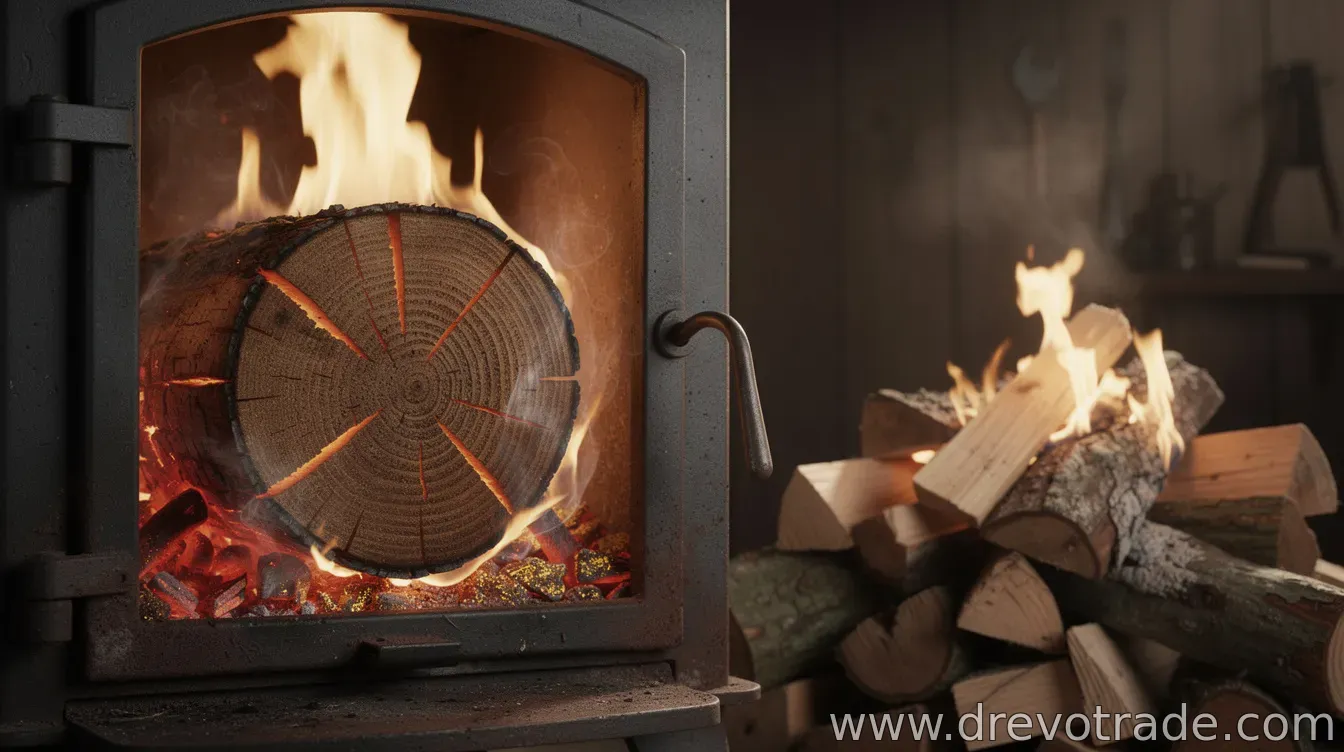 Oak wood is known for its thermal and energy properties, which make it one of the most efficient types of wood for heating. The main reason for its high coefficient of performance (COP) is its density and thermal energy per unit volume. Key factors affecting the efficiency of oak wood: 1) High specific heat: Oak wood has a high density, so one cubic meter of dry oak wood contains more heat than lighter species. This means that less wood is needed to reach the same temperature, but with a higher thermal output. 2) Low moisture content after drying: The optimal moisture content of oak wood is usually around 12–20%, while raw wood can contain a significant amount of water. Lower moisture content means less energy is spent on evaporating water during combustion, which increases the purity and duration of the flame. 3) High combustion temperature: due to its dense structure, oak wood provides stable and long-lasting combustion with a high temperature. This allows for more efficient heat from less fuel and reduces the percentage of incomplete combustion. 4) Less ash and smoke: oak usually leaves less ash and has a cleaner combustion, which reduces heat loss through unburned fuel and makes it easier to clean fireplaces and stoves. 5) The least impact on heat retention in the fireplace: the higher the quality of smoke and ash, the better the heat is retained in the heating system. Oak wood, due to its density and stable combustion, often provides longer periods of heat without frequent burning days. Practical tips for maximum efficiency: • Always store firewood dry: use a place with ventilation and protection from precipitation. Humidity below 20% significantly increases efficiency. • The size of the firewood should be optimal: shorter and more compact wood will ignite faster, but for a long burn, it is better to use long logs of reasonable size. • Maintain a solid base flame in the firebox or fireplace and regulate the air flow for stable burning. • Combine oak with other moderate-fire species in seasonal conditions to ensure a stable thermal regime and ease of burning. As a result, oak wood usually provides higher efficiency due to its density, low moisture content after drying and stable burning. It is usually better suited for long-term heating in stoves and fireplaces, where long-term heat output is important. | |
|
| |
Related materials:
![]()
![]()
![]()
| Total comments: 0 | |