21:53 Circular economy in woodworking: a second life for waste | |
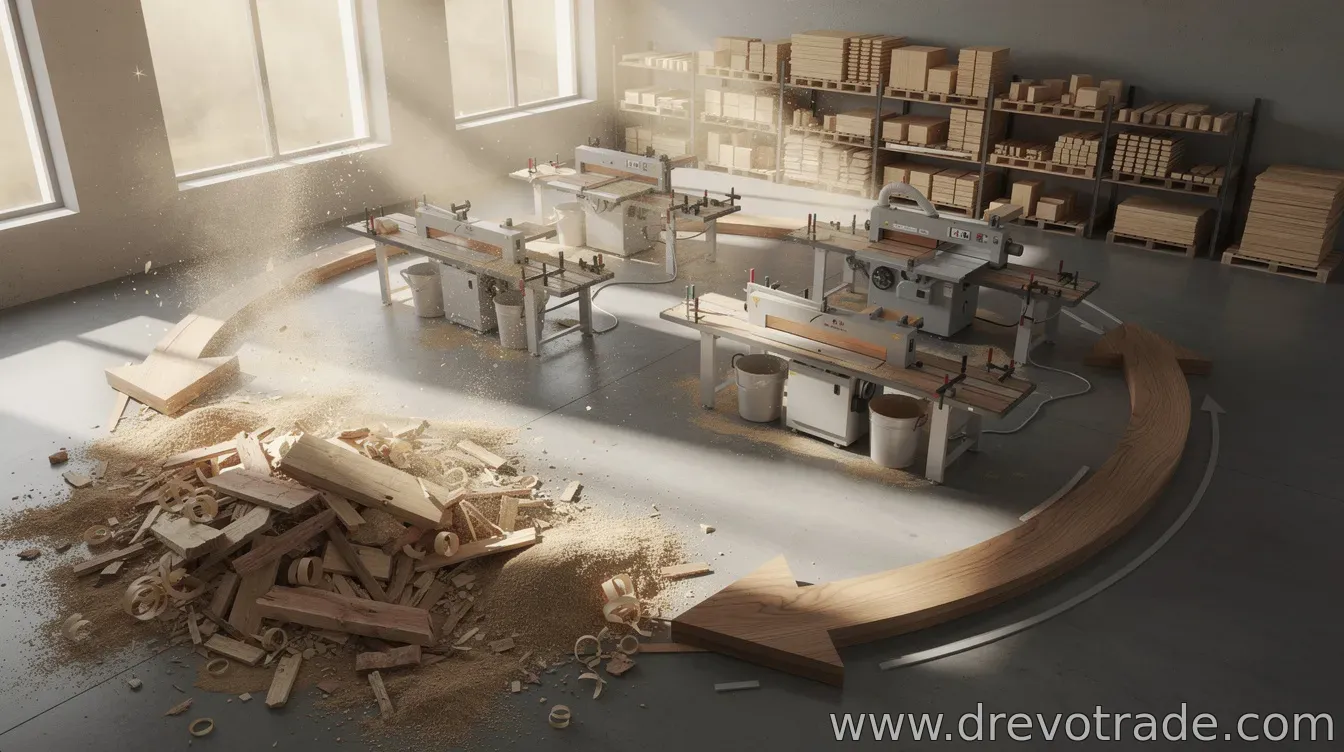 Woodworking traditionally works with relatively “material-intensive” processes, where a significant part of the raw material can turn into waste: sawdust, shavings, trimmings, dust, ash and sludge after filtration. In the circular economy approach, these fractions are not considered as waste, but as a resource that has a clear application within the same or related industries. The idea is simple: minimize losses at the cutting and drying stage, standardize the collection and sorting of residues, and then “close the loop” through recycling. The result is less accumulated waste, lower environmental impact and additional sources of value for companies. What waste becomes a resource The most common “second lives” include: sawdust and shavings for briquettes and pellets; trimmings and technological wood for the production of wood-composite boards; wood dust and part of the sludge after cleaning - as a component in the production of materials or as a raw material for thermal processes. Individual fractions after appropriate preparation can also be used in chemical processing. Reuse technologies The residues can then be dried, crushed, sorted and briquetting. Prepared wood raw materials with controlled parameters are used for the production of boards - this reduces the risk of defects and increases quality stability. And for energy use, ash content and calorific value indicators are important so that heat generators work efficiently. Economics: Less waste, more profit In addition, companies benefit from the predictability of resource supply. Instead of purchasing external components, they can partially replace them with their own residues. In the long term, this strengthens competitiveness – especially where energy costs and raw material prices are variable. Environment and compliance In practical terms, this also means better control processes: from environmental standards for waste management to traceability of material flows. For many companies, this is becoming an element of ESG policies and preparation for requirements from customers and regulators. Conclusion: The second life of waste in woodworking is not a one-time initiative, but a systemic restructuring of processes. From collection and preparation of fractions to use in boards, biofuels or materials, the circular model turns technological residues into a managed resource. It is precisely such approaches that increasingly determine the competitive advantage of manufacturers who want to simultaneously increase efficiency and meet modern environmental expectations. In the next steps, companies usually make it advisable to evaluate their own residue flows, identify the most “valuable” fractions for processing and select technologies for existing equipment. In parallel, it is worth building partnerships with processors and manufacturers of related products so that the cycle operates stably throughout the year. | |
|
| |
| Total comments: 0 | |