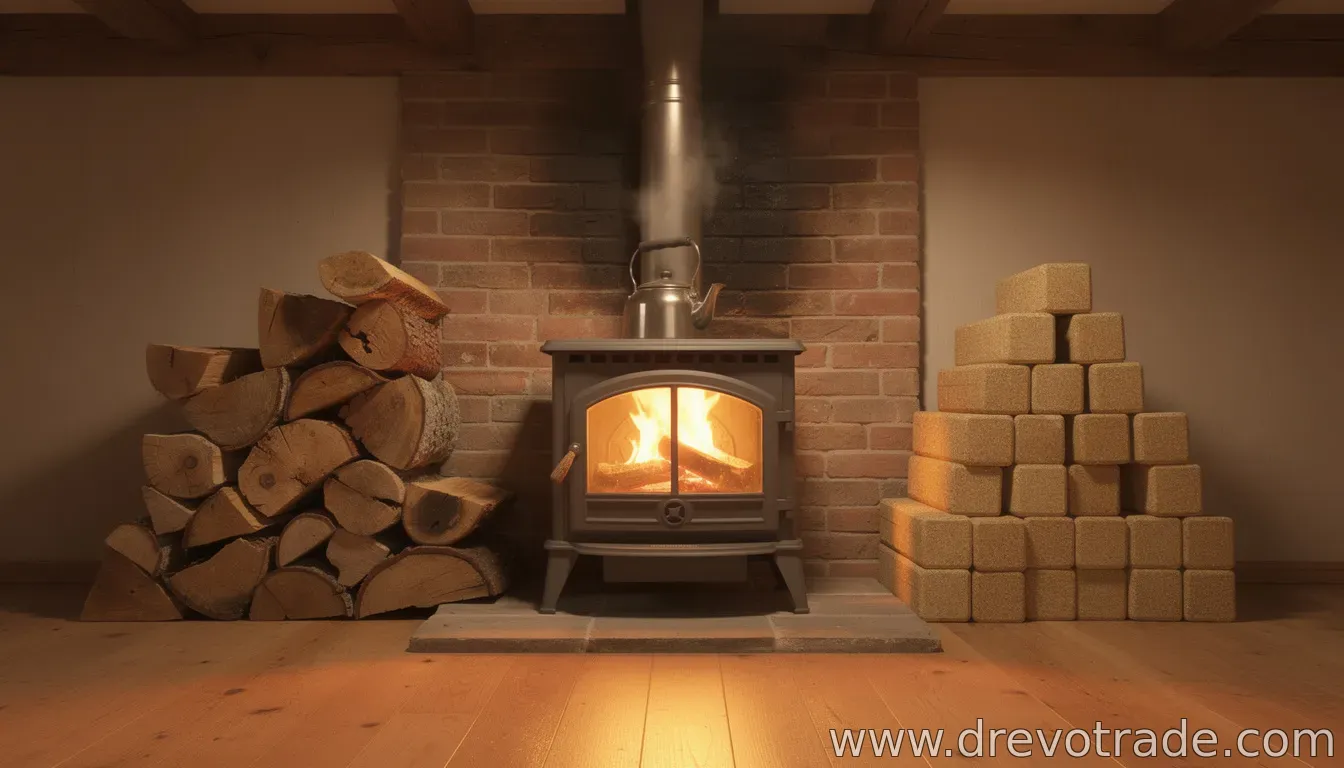
When choosing a home heating fuel, many people face the question: which is better—firewood or briquettes? Both options have their strengths and limitations. Below, we break down the key criteria to help you decide which is right for you.
Efficiency and Combustion Power
Firewood traditionally offers a longer burn angle and can provide a stable temperature when properly stacked and stoked. Briquettes burn faster and require more frequent refills, but they provide consistent power and less smoke when properly dried. For heating a private home, both options are effective when used correctly.
Moisture Content and Preparation
The key difference is moisture content and shelf life. Firewood requires proper drying (usually at least 1–2 years under favorable conditions) and can contain moisture, which reduces its calorific value and increases smoke emissions. Briquettes made from compressed wood dust or fine-grained sawdust typically have lower moisture content and stable combustion, but quality varies depending on the composition and manufacturer.
Cost and Savings
The price per unit of heat may vary by region. Briquettes are generally cheaper by weight and easier to transport and store—they take up less space and require virtually no degassing. However, this depends on the market and seasonal prices. When comparing net savings over the heating season, it's important to consider fuel consumption and the frequency of refilling.
Convenience and Storage
Briquettes are more convenient than briquettes: they have a uniform shape, require less storage space, and are cleanly stacked. Firewood requires sorting, cutting, preparation for lighting, and requires more energy to maintain the fire. In terms of smoke levels and pollution, high-quality briquettes typically produce fewer fine particles in the smoke.
Environmental Friendliness and Emissions
Both options are renewable energy sources if the wood is actively harvested and does not deplete forests. Briquettes are often made from sawdust and wood waste, which reduces waste, but combustion quality depends on the raw materials and pressing technology. In general, under similar conditions, modern heating stoves and boilers will be more efficient with well-dried materials.
Practical Recommendations
If your priority is maximum autonomy and long-lasting combustion, firewood is suitable, provided it is properly dried and stacked. If compactness, clean operation, and ease of storage are important, choose high-quality briquettes. In cold climates, you can combine the two: use firewood initially and briquettes to maintain consistent heat at night.
Bottom line: the choice depends on the availability of raw materials, storage conditions, the type of heating equipment, and personal preference. Estimate your total fuel consumption for the season and compare the costs of purchase, storage, and maintenance. | 