14:31 Briquettes vs firewood: what’s best for heating a country house? |
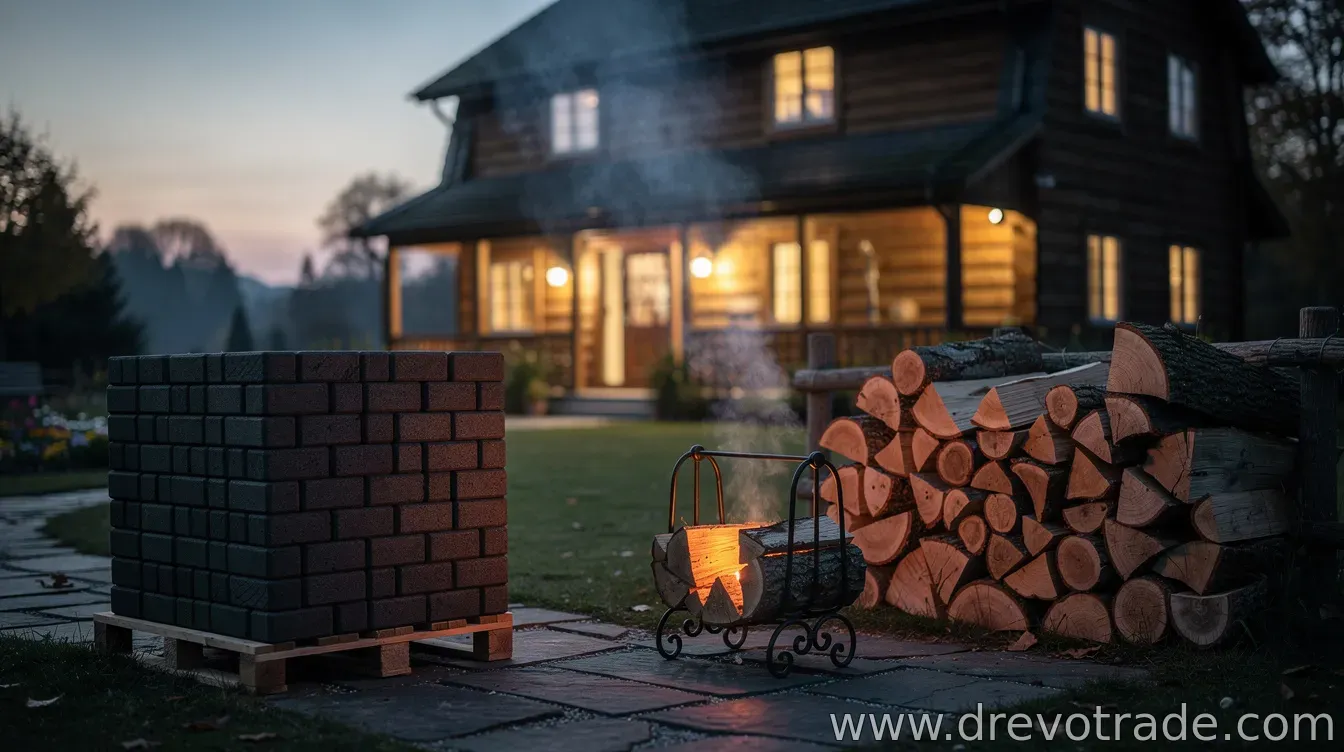 Heating a country house reliably and affordably depends less on one “perfect” fuel and more on how you match the fuel to your heating needs—overnight stability, daytime convenience, storage limits, and local supply. Briquettes and firewood each have strengths, and in many homes the most practical solution is a blended strategy. Briquettes are typically manufactured from compressed biomass, which can make them more uniform in size and burn characteristics. That uniformity often translates into steadier heat output and easier planning—especially when you want consistent temperatures overnight or while you’re away. They can also be cleaner to handle day to day, with less variation in burn rate from batch to batch. Firewood, on the other hand, remains popular because it’s widely available and can be relatively affordable when sourced locally—particularly if you have access to your own wood. With the right species and good seasoning, firewood can produce strong, high-heat flames and a classic “instant comfort” feel. It also gives you more flexibility to adjust output by changing how you load and manage the fire. The key trade-off is control versus storage and effort. Firewood usually requires more space and preparation: you need adequately seasoned wood, careful stacking, and ongoing handling. Briquettes may cost more per unit of energy in some regions, but they can be simpler to store and handle because they’re denser and more consistent. When briquettes are the better fitIf your priority is steady heat, predictable burn times, or minimal day-to-day mess, briquettes often shine. They’re especially useful for maintaining a baseline in a stove or fireplace that you don’t want to manage continuously. They can also reduce the risk of uneven burning caused by wet or poorly seasoned wood—provided you buy from a reputable supplier. When firewood is the better fitIf you value flexibility and have reliable access to seasoned logs, firewood can be the most economical route. It’s a strong choice for households that enjoy tending the stove and want the ability to ramp heat up or down quickly. Firewood can also be ideal if you already have suitable storage and can manage seasoning schedules. Why “both” often winsA dual-fuel approach lets you use each product where it performs best. A common pattern is to use firewood for daytime peaks and briquettes for longer, steadier burns—for example, when you’re preparing for bed or need a stable temperature while you’re out. Many households find this reduces how often they need to reload while keeping the experience and warmth they like from logs. To make either option work well, focus on fundamentals: burn only properly suited fuel for your appliance, maintain good ventilation, and avoid damp wood. If you choose firewood, aim for logs that are genuinely well-seasoned rather than “almost dry,” because moisture levels strongly affect efficiency and smoke. If you choose briquettes, store them dry and buy from suppliers who can provide consistent quality. Ultimately, the best way to heat a country house depends on your practical constraints as much as fuel physics. If you want the simplest day-to-day routine and predictable heat, start with briquettes; if you want flexibility and potentially lower costs from local wood, prioritize firewood. If you can support both, a blended plan often delivers the best balance of cost, convenience, and comfort. |
|
|
Related materials:

![]()
![]()
| Total comments: 0 | |