11:40 Hardwood vs softwood firewood: real burn-time difference |
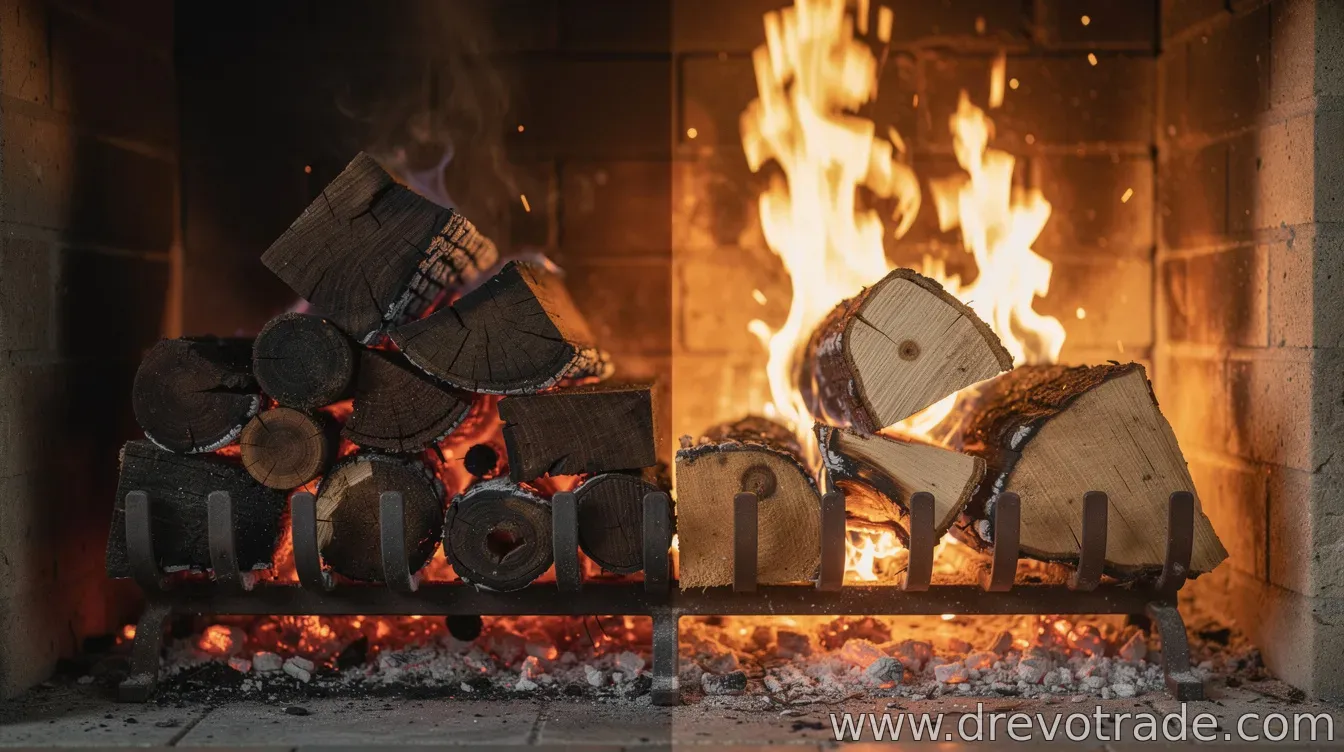 People often split firewood into two buckets—hardwood and softwood—then assume the longer burn is automatically “hardwood.” While that’s usually directionally true, the real difference comes down to density, structure, and how dry the wood is. In practice, burn time can overlap a lot between categories. What hardwood vs softwood actually means “Hardwood” and “softwood” refer to the type of tree (broadleaf vs conifer), not how hard the wood feels to your hand. Many hardwoods are naturally denser and tend to produce more coals, which helps a fire last. Many softwoods are less dense, ignite more quickly, and may burn faster—often with more flames and less long-lasting ember production. How burn time is determinedBurn time is mainly driven by how much energy the wood contains per unit volume and how quickly that energy is released. Denser wood usually has more mass and can sustain combustion longer. Moisture also matters: wet or poorly seasoned firewood loses heat to evaporation and can feel like it “won’t burn,” even if it eventually does. Seasoning is critical: wood with higher moisture content can drop the effective burn time and heat output dramatically. Two logs from the same tree species can burn very differently if one is fully seasoned and the other is not. Typical real-world burn-time expectationsIn many regions, seasoned hardwood is commonly reported to last longer in a steady burn—especially when you’re aiming for longer overnight coals. Softwood often works better for getting a fire going quickly or for shorter burns where flames are desirable. A useful way to think about it: hardwood tends to provide a slower, steadier burn and more lingering embers, while softwood is more likely to flare up and consume faster. However, the difference isn’t guaranteed across every species or every setup. Why there’s overlap Some softwoods can burn longer than expected—particularly if they’re dense for their species or if you’re burning them in a way that encourages slower combustion (proper airflow, thicker splits, and dry fuel). Likewise, some hardwood can burn faster if it’s relatively low-density for its type, cut too small, or not properly seasoned. Even “hardwood” can vary: oak, hickory, and maple are often associated with longer-lasting coals, while other hardwoods may be less dense. Among softwoods, pine and spruce can behave differently depending on resin content and dryness. What to check for the biggest burn-time gainsIf your goal is maximum burn time, the category matters—but fuel quality matters more. Look for:
For many households, a practical approach is to combine both: softwood can be excellent for starting and warming the stove quickly, while hardwood makes the longer-lasting base once the fire is established. Bottom line Hardwood is generally the better choice for longer burn time because it’s usually denser and produces more sustained coals. But the “real difference” is strongest when both types are properly dried—species choice, moisture content, and how you load the fire can outweigh the hardwood/softwood label. |
|
|
Related materials:
![]()

![]()
| Total comments: 0 | |