15:49 Briquettes vs pellets vs firewood: choosing the right fuel | |
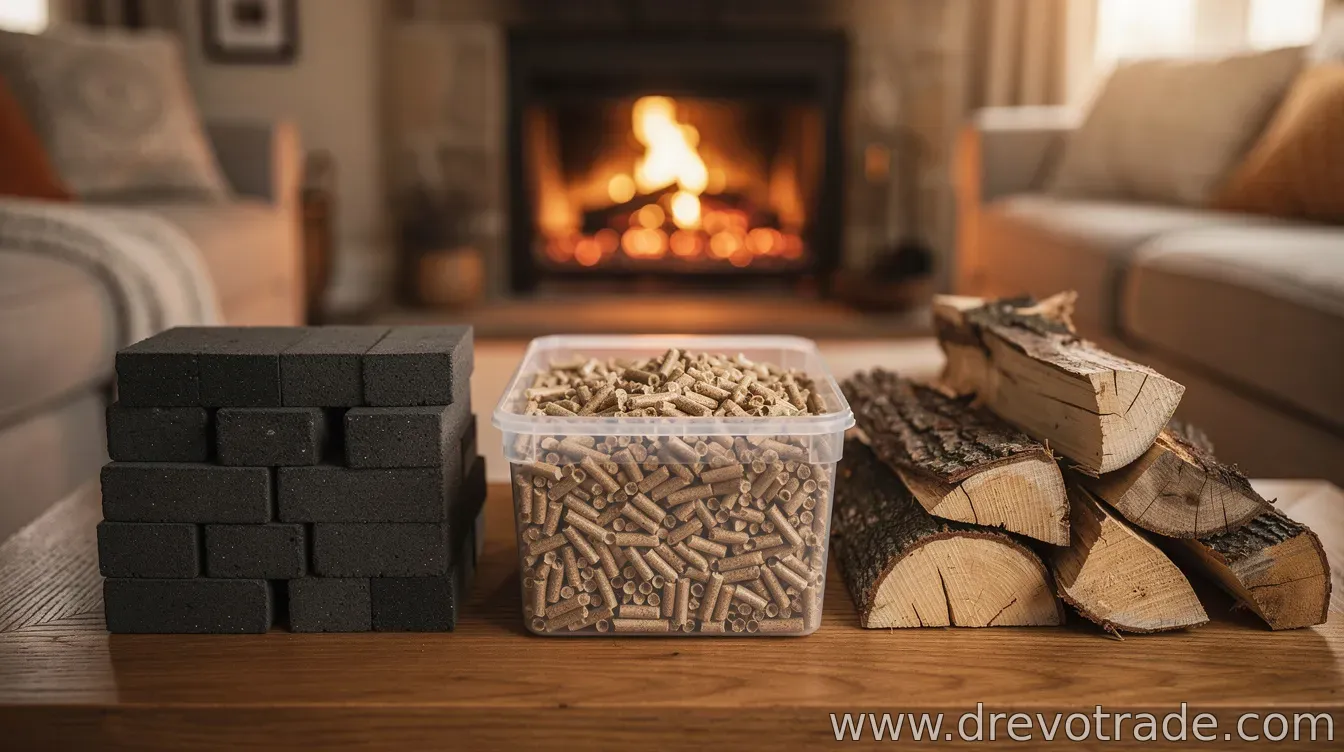 With energy prices and environmental concerns in the spotlight, many households are reassessing how they heat their homes. Briquettes, wood pellets, and traditional firewood all burn cleanly compared with older solid fuels—yet they differ sharply in preparation, heating efficiency, storage needs, and day-to-day convenience. The “right” fuel usually comes down to three questions: What equipment do you have (or plan to buy), how much space you have for fuel storage, and what matters most to you—lowest cost, consistent heat, or convenience. Briquettes: compact fuel with straightforward handlingBriquettes are made by compressing biomass materials such as sawdust or agricultural residues into dense blocks. They’re typically easier to store than loose firewood because of their uniform shape and lower volume per unit of energy. In many stoves designed for solid fuel, briquettes can offer a longer burn time than smaller, split logs—particularly when the fuel is well-seasoned and the stove is properly set up. That said, briquette performance depends on quality. Look for dry fuel with consistent density and reliable specifications, because poor binding or high moisture can reduce heat output and increase smoke or residue. Briquettes can also be a good middle ground if you want something more compact than firewood without switching to an automatic pellet system. Wood pellets: the convenience option for automated heatingPellets are produced by pressing dried wood (often sawdust) into small cylindrical pellets. Their key advantage is compatibility with pellet stoves and pellet boilers, which can meter fuel and control combustion for steady, repeatable heat. For households prioritizing convenience—such as scheduled heating or reduced manual feeding—pellets often win. Pellets also tend to burn efficiently because they’re uniform and low-moisture when manufactured to standard specifications. The trade-off is storage and system fit: pellet appliances are specialized, and fuel supply can be more regionally dependent. If you already have (or plan for) a pellet-ready heating system, pellets can be among the most user-friendly options. Firewood: familiar supply, but moisture management mattersTraditional firewood remains popular because it’s widely available and works with many wood-burning stoves, fireplaces, and some boilers. However, firewood is also the most variable fuel on the list. The biggest factor is moisture content: properly seasoned firewood burns hotter, produces less smoke, and wastes less energy. Firewood’s performance depends on splitting, drying time, and storage practices. It also takes more space to store in bulk, and it generally requires more labor—cutting, splitting, stacking, and ongoing cleaning. For some homes, that effort is offset by lower purchase cost or easy local access, but it’s an important part of the equation. How to decide: compatibility, efficiency, cost, and storageWhen comparing fuels, consider more than the price per bag or cord. Ask how each fuel matches your equipment and your daily routine:
For many homeowners, the “best” option is the one that minimizes inefficiency. If your stove setup isn’t matched to the fuel, even high-quality biomass can underperform, leading to lower heat and more smoke. Practical buying and usage tipsWhichever fuel you choose, reliability starts at purchase. Select fuels with clear quality standards—especially moisture content for firewood and consistent grading for pellets and briquettes. Store fuel correctly: keep pellets dry and protected from humidity, briquettes sealed if needed, and firewood elevated with airflow to prevent re-wetting. Finally, keep your heating system tuned. Clean combustion improves efficiency for all solid fuels, and regular maintenance (including ash management and chimney checks) helps ensure safe, complete burning. Choosing between briquettes, pellets, and firewood ultimately comes down to balancing convenience, space, and total delivered value. By matching fuel to equipment and focusing on quality—particularly dryness and consistency—you can get more usable heat and a more comfortable home throughout the colder months. | |
|
| |
Related materials:
![]()
![]()
![]()
| Total comments: 0 | |