14:36 How to Calculate Firewood or Briquette Needs for a Season | |
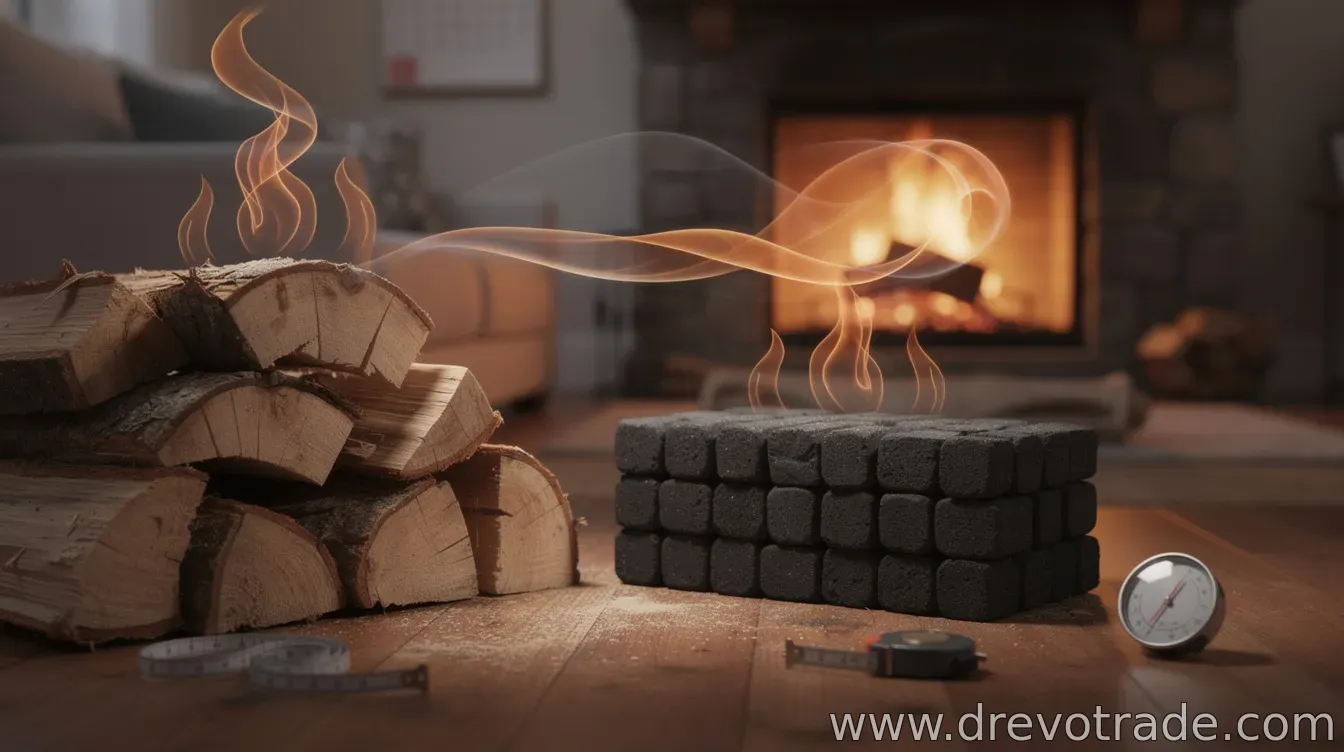 Estimating your seasonal fuel needs takes more than guessing “a few stacks.” A better approach is to start with your expected heat demand (for example, from fuel bills or insulation assumptions) and then convert that energy requirement into the equivalent amount of firewood or briquettes. This guide walks you through the calculation in a way that works for most homes, stoves, and boilers—so you can buy the right amount and avoid both shortages and waste. 1) Estimate your seasonal heat demandThe most reliable starting point is your past energy use. If you already heat with electricity, gas, or oil, look at your seasonal consumption for the last year (or an average of similar winters). Convert that into energy (kWh), if needed, using your utility’s billing units. If you don’t have historical data, estimate heat loss instead: homes that are poorly insulated can need several times more heat than well-insulated homes. As a rough planning step, many homeowners begin with a seasonal kWh target based on square footage, insulation quality, and local heating degree days (your local climate determines how long you need to run heat). 2) Account for appliance efficiencyFirewood and briquettes don’t convert to useful room heat perfectly. Stoves, boilers, and open fireplaces have different efficiencies. Use an efficiency factor that matches your equipment—commonly around 50–80% depending on stove type, maintenance, and how you operate it. How it works: if your home requires 10,000 kWh of useful heat, and your system is 70% efficient, you’ll need about 10,000 ÷ 0.70 = 14,286 kWh of fuel energy delivered to the appliance. 3) Convert fuel energy to the amount you’ll buyNext, translate the required fuel energy into wood or briquettes using the fuel’s energy content (calorific value) and how you measure it. Values vary by species, moisture, and briquette formulation, so use numbers from the supplier or a reputable source. Typical planning method: Fuel needed (energy terms) = Useful heat demand ÷ Appliance efficiency Fuel needed (quantity) = Required fuel energy ÷ Fuel energy per unit For firewood, you must also consider moisture. “Seasoned” wood usually burns better than freshly cut wood, but still varies. If your wood is sold by volume (such as cubic meters/cords), energy per measured volume changes with packing density and moisture content. For briquettes, many suppliers provide energy content per kg, so conversion is often simpler. You’ll usually be comparing your required kWh to the kWh-per-kg (or kWh-per-ton) figure from the product spec sheet. 4) Pick realistic moisture and product specsMoisture content is one of the biggest sources of error. Wet wood spends more energy evaporating water instead of heating your home. If you can, measure moisture (or at least verify that the wood has been properly dried and stored). For briquettes, stick to the manufacturer’s stated energy value and confirm whether it’s based on dry or “as supplied” conditions. If your supplier only provides a rough value, build in a safety buffer—many users find that underestimating moisture is more costly than buying slightly extra and using leftovers next year. 5) Example calculation (quick plug-in method)Let’s say your home needs 12,000 kWh of useful heat during the heating season, and your stove/boiler efficiency averages 65%. Your required delivered fuel energy is: 12,000 ÷ 0.65 ≈ 18,462 kWh If your briquettes have an energy content of about 4.8 kWh per kg (example value), then: 18,462 ÷ 4.8 ≈ 3,846 kg That’s roughly 3.85 tonnes for the season. If your briquettes are lower-energy or you run the stove less efficiently than expected, increase the estimate accordingly. For firewood, the process is the same, but your “kWh per unit” depends on moisture and how the volume is measured (stacked vs. measured solid volume). If you know your wood’s dry/seasoned energy per volume from a reliable source, you can run the same division; otherwise, it’s often better to use supplier data and adjust for moisture. 6) Add practical buffers for real-world usageEven with a good calculation, real life adds variability: colder-than-usual months, using the stove for cooking, letting the fire die down less often, or differences in how you load wood. Consider adding a buffer of 5–20% depending on uncertainty and climate volatility. You should also consider storage losses: if firewood is not protected from rain and humidity, moisture can creep up over the season, reducing effective performance. Bottom line: The most accurate approach is “heat demand → ÷ efficiency → ÷ fuel energy.” Once you use your season’s kWh need (or a credible estimate), and then apply your stove/boiler efficiency plus correct fuel energy values, you can purchase a quantity that matches your actual needs. If you share your home size, heating system (stove/boiler, fuel type), local climate, and whether you’re pricing firewood by cord/cubic meter or briquettes by kg/ton, you can tighten the numbers further. | |
|
| |
Related materials:
![]()
![]()
![]()
| Total comments: 0 | |