14:39 From Sawdust to Briquette: How Pini Key Fuel Is Made | |
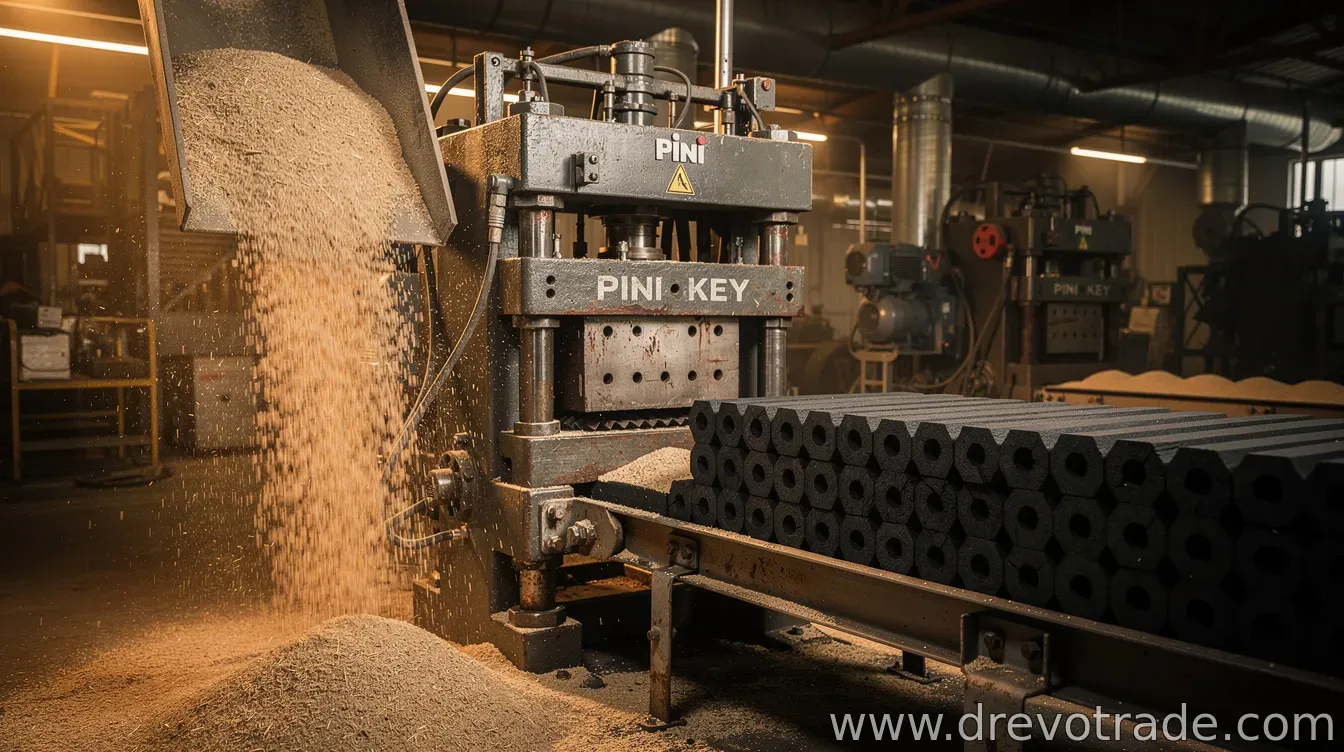 Pini® Key briquettes are a popular solid biofuel made from wood processing waste such as sawdust and wood shavings. The basic idea is simple: remove moisture, mix and bind the material, then compress it under heat and pressure so the result is dense, uniform, and easier to burn than loose biomass. The process starts with collecting industrial wood residues from sawmills and woodworking operations. Because the fuel’s performance depends heavily on the raw input, producers typically sort the material to remove unsuitable contaminants and ensure consistent particle size. Drying: turning waste into a fuel-ready materialBefore compression, the biomass is dried. Moisture is one of the main drivers of poor combustion and unstable output. Producers lower water content using heated drying systems until the material reaches the target dryness needed for efficient densification. Shaping and densification under pressureOnce dried, the sawdust is fed into a briquetting press. The material is compressed at high pressure to form a pre-shape, then further processed through specialized equipment designed to create the characteristic Pini® Key “corkscrew” form. That geometry helps improve structural stability and can influence airflow during burning. Heat and binding effectsDuring pressing, heat and compression can activate natural wood binders (such as lignin), helping the briquette hold together without adding a lot of external adhesive. Some production lines may apply small adjustments to optimize formation and durability, but the core principle remains: densify wood residues so they burn more efficiently. Quality checks typically focus on density, dimensional consistency, and mechanical strength—how well the briquettes resist crumbling during handling and transport. Many facilities also verify moisture content to confirm the briquettes will ignite reliably and sustain combustion. Cooling, packaging, and storageAfter forming, the briquettes are cooled before packaging. Cooling reduces residual surface heat and helps prevent moisture uptake. The finished fuel is then sealed and stored in dry conditions to protect it from humidity, which can lower heating performance and increase issues like surface softening. Overall, the transformation from sawdust to Pini® Key briquettes is a chain of controlled steps—cleaning, drying, compressing, and finishing—designed to turn low-value waste into a consistent biofuel. As demand grows for renewable heating options, producer attention to moisture control and compression quality remains the key factor behind reliable performance. | |
|
| |
Related materials:
![]()
| Total comments: 0 | |