14:51 Circular Economy in Woodworking: Turning Waste Into Energy | |
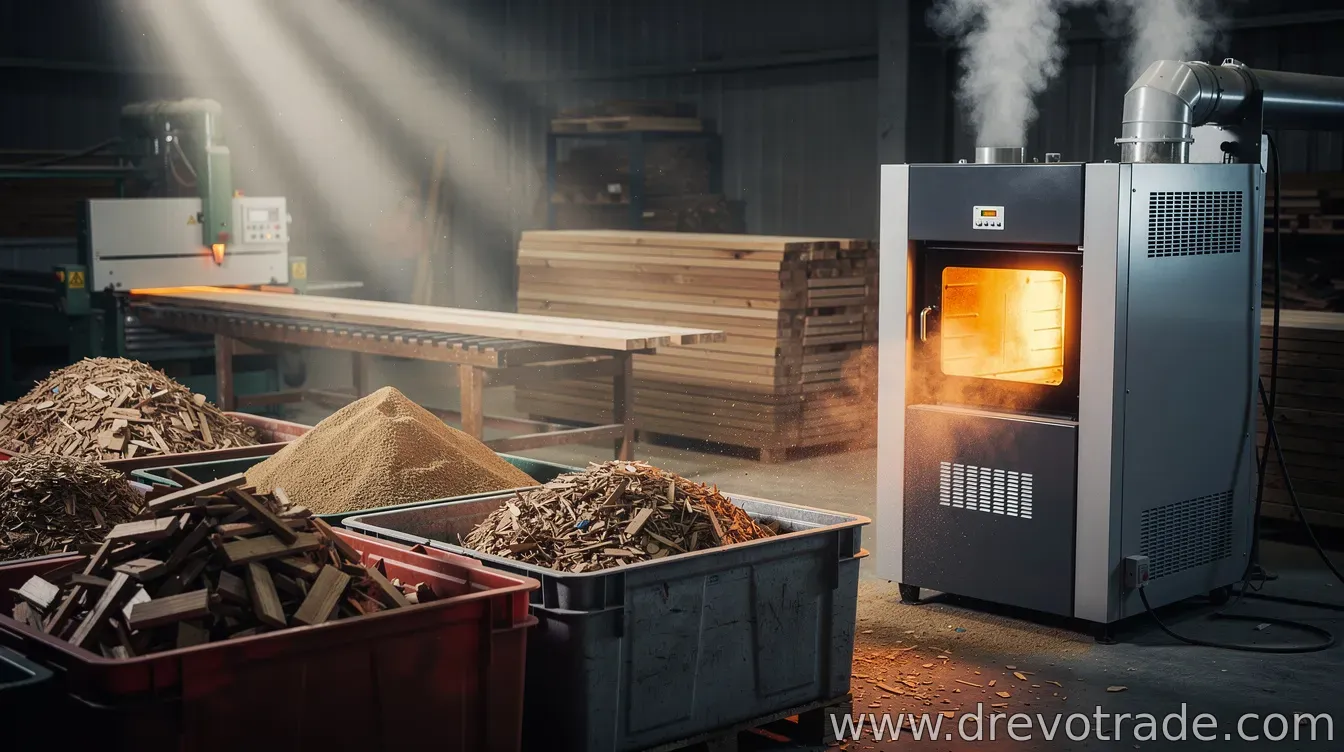 Across the woodworking sector, a growing number of producers are reframing “waste” as a valuable input—an approach aligned with the circular economy. Instead of sending sawdust, bark, and offcuts to landfill, firms are reprocessing residues into energy, materials, and feedstocks that can power operations or support downstream manufacturing. At the center of this transition is biomass energy: when wood residues are collected and processed properly, they can be burned in high-efficiency boilers, converted into heat for drying and processing, or upgraded into densified fuels such as pellets and briquettes. Many mills also use waste streams internally to reduce exposure to fluctuating energy prices. How woodworking residues become usable energyWoodworking generates diverse byproducts—from fine sawdust and shavings to larger trim pieces and sanding dust. Each stream can be handled differently depending on moisture content, contamination risk, and particle size. Common pathways include thermal conversion (for heat and power) and densification (to improve fuel consistency and transportability). For example, pellets and briquettes typically require relatively clean, uniform feedstock and tight moisture control. Boilers and combined heat-and-power systems can often accommodate a broader mix of residues, but they still demand careful separation to avoid non-wood contaminants that can affect combustion performance. Why the circular approach is gaining momentumSeveral pressures are encouraging adoption. Landfill diversion targets and waste-treatment costs make residues less attractive as disposal material. Meanwhile, energy-transition goals and carbon-accounting requirements create incentives to use renewable biomass and document reductions in emissions. There is also an economic logic beyond sustainability. Converting residues into energy can lower operating expenses in energy-intensive steps such as kiln drying and finishing. In some cases, companies can sell excess fuel or heat to nearby industrial users, strengthening local circular networks. Challenges: quality control, logistics, and contaminationDespite the promise, turning residues into energy isn’t automatic. Circular systems depend on consistent collection practices across sites and reliable sorting routines. Mixed materials—especially glues, coatings, stains, or treated wood—can complicate compliance and fuel quality, potentially limiting what can be burned or densified. Moisture variability is another practical obstacle. Residues that are wet or irregular can reduce energy efficiency and increase handling issues. As a result, many operators invest in on-site storage management, pre-drying, screening, and monitoring to keep feedstock within required specifications. To address these risks, companies increasingly build partnerships across the supply chain, aligning producers, waste handlers, and energy users around shared standards. Clear documentation of material composition and treatment status helps ensure that only suitable biomass enters conversion pathways. Looking ahead, the most resilient circular woodworking models are likely to combine multiple options—using some residues for energy while directing others into higher-value material applications such as particleboard feedstock or engineered wood products. That layered approach can improve overall utilization rates and reduce the need for disposal even as product mixes and regulations evolve. | |
|
| |
| Total comments: 0 | |