14:50 Circular economy in woodworking: turning waste into energy |
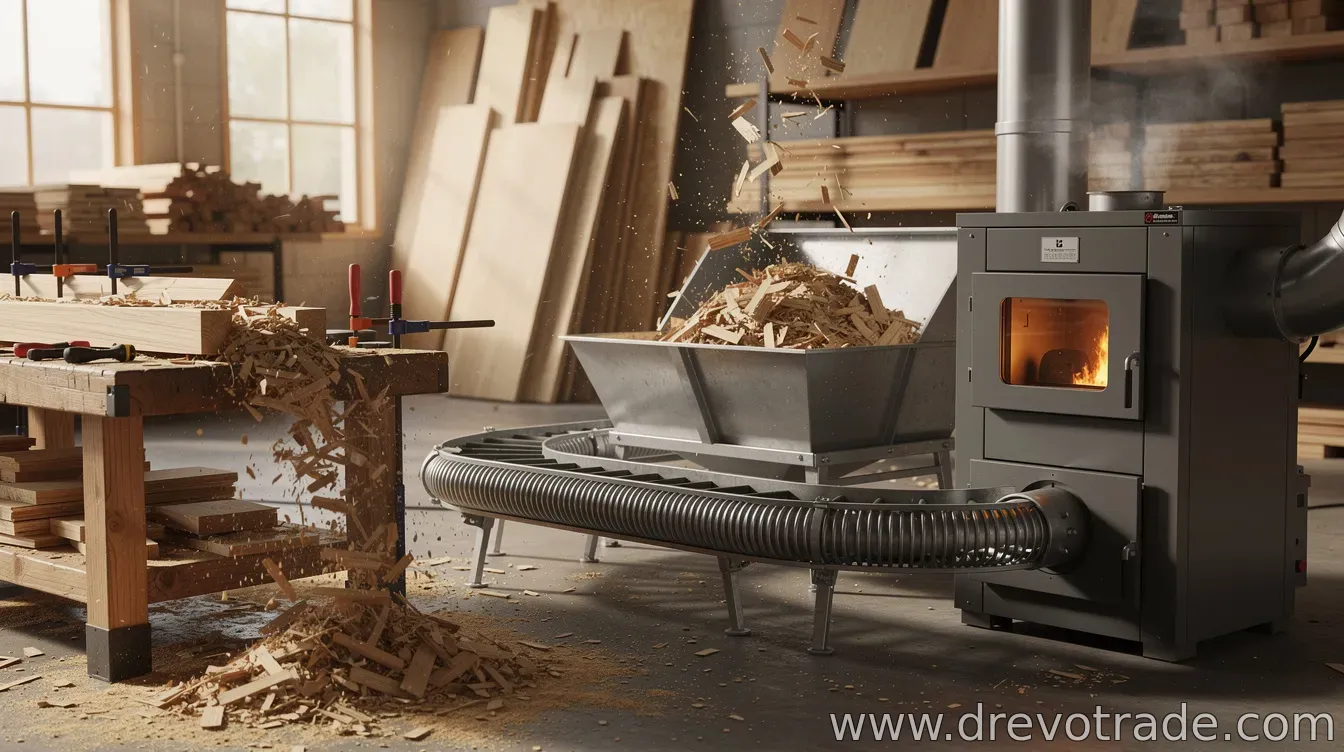 Woodworking has long produced valuable materials—yet it also generates residues such as sawdust, wood chips, bark, sanding dust, and offcuts. As sustainability targets tighten, many manufacturers are rethinking what happens to that material after it leaves the production line, moving toward a circular economy model. In this approach, waste streams are treated as feedstocks for energy recovery and, in some cases, for further material reuse. The goal is to reduce landfill and incineration of usable biomass while lowering the overall carbon footprint of building products. Why woodworking waste is well-suited for energy recoveryMost residues from woodworking are primarily lignocellulosic biomass—organic matter that can be converted into energy. When handled correctly, these streams can support heat and electricity generation, replacing fossil fuels used for drying, space heating, and process operations. Facilities typically separate waste by type and moisture level. Clean wood residues are often easier to process, while mixed or contaminated streams may require additional sorting or pre-treatment to meet safety and performance requirements. How waste is turned into energyCommon pathways include direct combustion of dry wood waste in boilers, biomass gasification for syngas production, and anaerobic digestion for certain biodegradable fractions (more typical in settings with compatible organic waste). Some operations also use densification—such as making wood pellets or briquettes—to improve handling efficiency and fuel consistency. Beyond heat and power, recovered residues can support industrial steam systems used to run presses, kilns, or finishing lines. That can be particularly valuable for plants with continuous process loads, where on-site energy recovery reduces dependence on external utility supply. Increasingly, companies are exploring biorefineries and advanced conversion options that aim to maximize value from multiple fractions—although these systems often require careful feedstock quality control and capital investment. Benefits for manufacturers and the environmentEnergy recovery can bring immediate operational advantages: lower disposal costs, improved raw material utilization, and potential long-term savings from reduced fuel purchases. Environmentally, substituting biomass-derived heat for fossil energy can cut net greenhouse gas emissions, especially when the biomass originates from sustainably managed wood and residues that would otherwise be discarded. Circular practices also strengthen supply-chain resilience. By using residues that are already produced internally, manufacturers can lessen exposure to fluctuations in energy prices and reduce reliance on external fuel contracts. Challenges and the need for better sorting and complianceDespite the promise, implementing circular energy strategies is not plug-and-play. Variability in residue quality—such as moisture content, contamination from coatings or adhesives, and differences across products—can affect combustion efficiency and emissions performance. Plants may need upgrades to dust collection, storage, and feeding systems to keep fuel specifications stable. Regulatory requirements for air emissions, worker safety in dust-heavy environments, and permitting for biomass equipment also shape what is feasible. Operators frequently pair energy recovery with improved waste segregation and monitoring to ensure both performance and compliance. In some cases, the best pathway is not “energy first.” Wood residues that can be repurposed as engineered wood products, insulation, or packaging may deliver higher material value before any final conversion to energy. That hierarchy—reuse, then recovery—aligns with circular economy principles. As woodworking manufacturers scale these systems, the sector’s biggest opportunity may lie in better data and process design: measuring residue volumes, characterizing fuel quality, and matching each waste stream to the most appropriate conversion route. Done well, turning waste into energy can become a practical step toward lower-carbon production without compromising product quality. |
|
|
Related materials:
![]()
![]()
| Total comments: 0 | |